
Looking for more expert insights?
Our innovative solutions put your customer front and center.
Over the last decade, the continued growth of Everyday Low Price players and different online business models has put a lot of pressure on the market position of traditional retailers. Many of them have reviewed their price strategies, often leading to price decreases and increased promotional pressure with limited long term gains and ultimately deteriorating their economics.
Given the increasing power of retailers, the above trend is obviously impacting CPG companies as well. On top of intensive price negotiations, retailers aim to impose strong promotions on A brands - often funded by the suppliers - to increase store traffic and enhance their price perception. For CPG's this results in a significant value dilution and out-of-pocket investment, sometimes up to 25% of their gross revenue.
Despite the large & increasing cost of trade promotions, many companies still struggle to manage them properly. While retailers are getting better at leveraging customer data to improve their shopping experiences with relevant content and personalized offers, many CPG companies are still using a variety of non-standard processes combined with a scattered tooling landscape and individual spreadsheets.
Whilst trade promotion management used to be reserved for CPG companies, it is getting increased attention in other industries as well. Companies are seeking to better track and manage their trade investments to ensure that they are in line with the company or category objectives. Using trade promotion management as a strategic lever is one reason, increasing margins is a second. The potential is significant. TPM implementations which are successfully embedded in an organization yield ROI increases of 8%-15%, with a direct bottom-line impact of 4-30% on the operating profit.
Traditional TPM is a closed loop process with 4 distinctive phases:
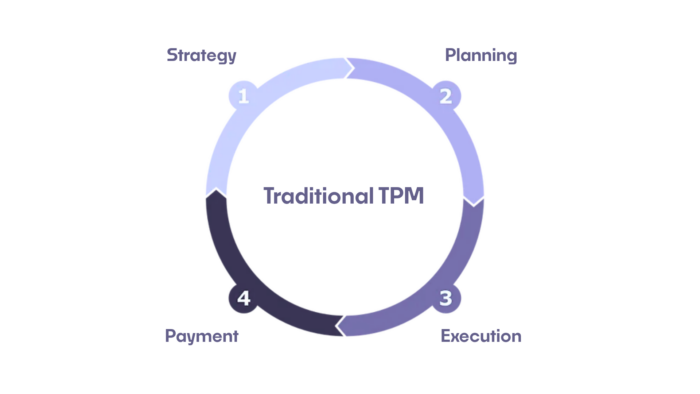
Whilst trade promotion management is a fundamental first step which allows to have a better overview of promotions and an increased control over budget, it doesn’t fundamentally drive towards running better promotions. The true value of trade promotion management lies in measuring the performance of past promotions and using that information in planning for future spending. This is often referred to as TPO or trade promotion optimization, adding two steps to the traditional closed loop:
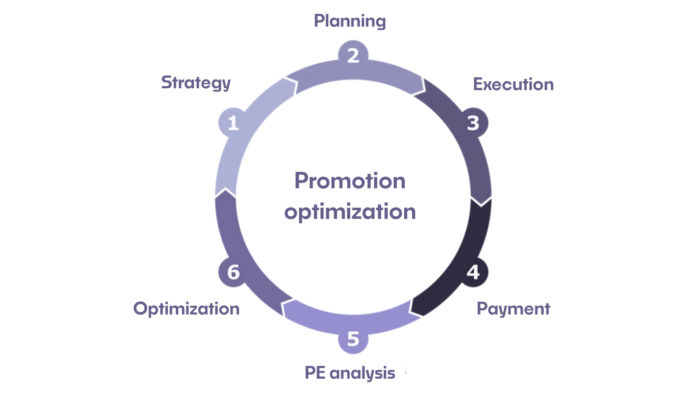
Implementing a closed loop trade promotion management process is not easy as it requires alignment across different departments with conflicting interests. Many companies have turned to TPM tools to reach the next maturity level. However, despite the fact that some of those tools offer very advanced functionality, the lack of process integration and in-house capability building often results in a return far below the expected value. Trade promotion excellence can not be obtained by just implementing a tool. It is a complex journey which needs to be tackled step-by-step.
When considering to improve your trade promotion management capabilities take following success factors into account:

Imagine you are able to expand your commercial team with 2 extraordinary ladies mastering big data insights and continuous learning skills. Moreover, they are good-looking, real team players and they communicate clearly.

Gathering market and competitive data to optimize pricing models is not always straightforward, especially in B2B. Opposed to the consumer market, B2B prices are less transparent, require effort to gather and are quickly outdated.

In today’s competitive market, it is crucial to understand how customers perceive your product’s value in relation to its price and competitors.