

Looking for more expert insights?
Our innovative solutions put your customer front and center.
Replenishment planning is a crucial aspect of supply chain management that involves the systematic process of restocking products to meet customer demand while maintaining optimal inventory levels. This white paper explores the significance of replenishment planning, its key components, benefits, challenges, best practices, and a real life implementation in the food industry.
Customer Satisfaction: It ensures that customers receive products on time, leading to higher customer satisfaction and loyalty.
Cost Reduction: Effective replenishment planning can minimize carrying costs associated with excess inventory and reduce the risk of stockouts.
Revenue Generation: By aligning inventory levels with customer demand, businesses can capture more sales opportunities, increasing revenue.
Supply Chain Efficiency: It enhances supply chain efficiency by optimizing inventory turnover rates, reducing waste, and improving resource allocation.
Demand forecasting: Accurate demand forecasting is the foundation of replenishment planning. It involves predicting future demand for products based on historical data, market trends, seasonality, and other relevant factors.
Inventory management: Inventory management is about maintaining the right quantity of products in stock. This involves setting optimal reorder points, safety stock levels, and economic order quantities (EOQ).
Order optimization: Order optimization aims to determine when and how much to order from suppliers. This involves considering lead times, supplier reliability, and order quantity constraints.
In order to optimize your replenishment process, and by extend your supply chain, you need to adopt technology. In the rapid changing world of today, companies cannot afford to lose time in their operations. With qualitative technology you can overcome this. Check out our digital ecosystem for planning tools for the latest updates.
Despite its benefits, replenishment planning comes with challenges:

To overcome these challenges and maximize the benefits of replenishment planning, businesses should adopt best practices, including:
Company X had a need for a centralized inventory management to avoid shortages and overstock. It deals with food products so there is an additional shelf life challenge. Because of limited storage place, large stock levels were not possible. At the same time, the company has an annual growth of +10%, which means that extra stock is necessary to facilitate this.
We introduced a replenishment planner as key position between production and sales. The position is responsible for restocking the warehouses so shortages are avoided. This by closely collaborating with sales, in order to have a detailed overview of products who are growing significantly. This resulted in an immediate impact on service level reports, confirming the need to have someone following the stock levels closely.
Stock levels are important for every company as they can cost a lot. A replenisher looks closely to these numbers. We did the same for company X and this resulted in 15% less stock every day without impact on the service level. Key was the analysis done with sales and production in order to have a perfect puzzle in inventory. This saved the company thousands in holding costs and working capital. Moreover, By opening up space, the company can grow more without the need of heavy capex investments.
Communication for both sales and operations is now centralized in one person resulting in a more streamlined process. Production changed into a pull based method where the replenisher gives the trigger for the quantity of production. This important turnaround was strategy based. The company is a sales focused organisation, this created the importance of someone who translates sales targets into operational excellence. This proves the importance of tactics in every part of the company.

A supply chain is by definition a network of organizations working together to create value and produce and deliver products and services to consumers. In this process, businesses interact in many ways with each other.
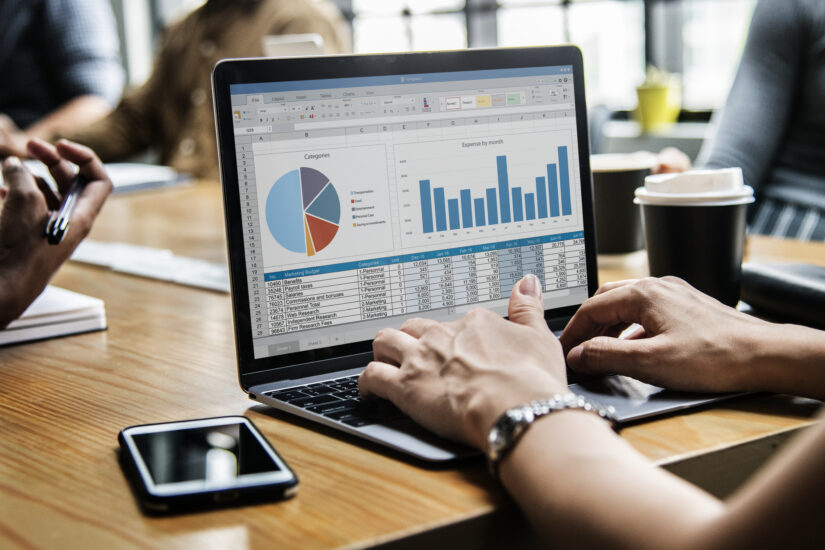
Part two explores how data visualization turns complex data into clear insights. It simplifies decision-making, supports collaboration, and improves sales outcomes with the right tools and tailored solutions.

This post is part 2 of a 4-part series on the customer centric supply chain.